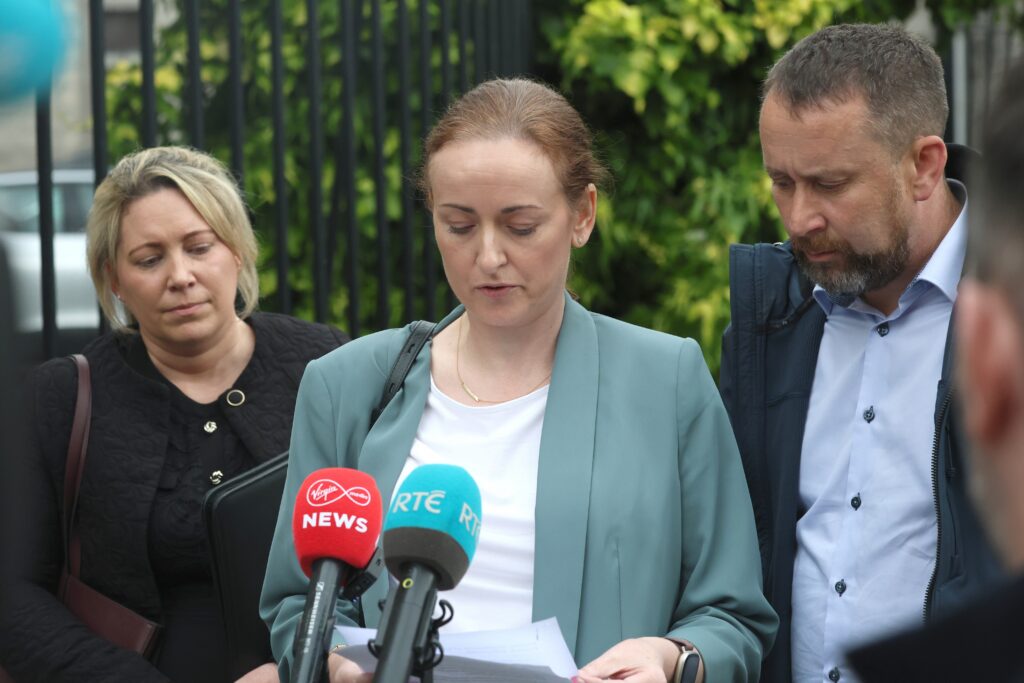
Some cases stay with you. The story of Leanne O’Brien, Patrick O’Donnell, and their baby son Pádraig is one of them.
On 18 June 2026, this Newcastle West family reached a settlement with the Health Service Executive (HSE) following Pádraig’s death shortly after his birth. The settlement, for an undisclosed sum, came four years to the day since they lost him. That timing was not lost on anyone who walked this journey with the family.
We want to share their story here, with their blessing because of what they hoped it would mean for other families.
What Happened
On the evening of 17 June 2022, Leanne contacted her local maternity unit. She was worried. Pádraig, normally so active, had reduced movement. She arrived at the Emergency Maternity Unit at around 7.10pm and waited roughly two hours before being seen. She was later moved to the labour ward for closer monitoring.
Pádraig was delivered by emergency Caesarean section in the early hours of 18 June 2022. He had been starved of oxygen and needed resuscitation and a blood transfusion at birth. His parents were told his condition was critical, and that treatment was unlikely to bring a meaningful recovery. They baptised him, surrounded by family, and made the heartbreaking decision to withdraw life support four hours after he was born.
Patrick has described it simply and powerfully: in a single day, he went from the happiest he had ever felt to the most devastating loss of his life.
There were earlier signs, too. At around 33 weeks, an increase in amniotic fluid, a condition called polyhydramnios (an excess of fluid surrounding the baby), was noted on a scan. It was not followed up during Leanne’s ongoing care. That concern was only raised later, in the HSE’s own internal review after Pádraig had died.
The Road to Resolution
In the years that followed, Leanne and Patrick took part in the HSE’s open disclosure process and, with our support, brought formal legal proceedings. They did this while grieving and while raising their family, including their son Lucas, born in November 2023.
Their aim was always clear. They wanted to understand what happened. They wanted the failings acknowledged. And they wanted to help make sure no other family would face the same loss.
At mediation on 22 May 2026, the HSE delivered a formal written apology, signed by Ian Carter, CEO of Mid West Acute and Older People Services. It acknowledged, without reservation, that there were failings in the standard of care provided to the family and to baby Pádraig, and it accepted full responsibility for those failings. The HSE confirmed it had reviewed its practices, changed its processes, and provided additional training to staff.
That apology mattered. It confirmed what Leanne and Patrick had long known, and had fought hard to have formally recognised.
The case was settled weeks later, on 18 June 2026.
In Their Own Words
Leanne O’Brien, Pádraig’s mother, said:
“Today is the hardest kind of day. Four years ago, we said hello and goodbye to our son in the same breath. We started this process because we needed to understand what happened to him, and because we could not let it happen to another family. The apology from the HSE meant something to us. It told us we were right to ask the questions we asked. Pádraig deserved better, and so does every baby that comes after him. We hope, with everything we have, that real change follows, not just for us, but for every mother who walks through the doors of a maternity unit trusting that her baby will be safe.”
Máire Maloney, the solicitor who represented the family, said:
“No settlement and no apology can bring Pádraig back, and Leanne and Patrick carry his loss with them every single day. What they sought was honesty, acknowledgement, and the assurance that lessons would be learned. The HSE’s apology and the resolution of this case give them that recognition.
“That this came on the fourth anniversary of Pádraig’s death makes the day all the more difficult, and all the more meaningful. Leanne and Patrick have shown remarkable courage and dignity throughout. Their hope, and ours, is that real and lasting change in maternity care follows, so that fewer families ever find themselves in their position. Accountability matters, because it protects the families who come after.”
Why This Work Matters to Us
We see law differently. For families like Leanne and Patrick, a legal case is never really about the law. It’s about being heard. It’s about answers. It’s about making sure a child’s short life leaves the world a little safer for those who follow.
Our job is to stand at your side through all of it, to listen, to guide you, and to fight your corner. We can’t promise to take the pain away. No one can. But we can promise to be honest, to be there, and to give your case everything we have.
If Your Family Has Been Affected
If you’ve lost a baby, or been harmed, because of failings in maternity or hospital care, you don’t have to carry it alone. You deserve answers. You deserve to be heard.
We’re here when you’re ready. Our specialist medical negligence team will listen with care, explain your options in plain terms, and guide you every step of the way.
Reach out to Máire Moloney and the team at HOMS Assist. One conversation is all it takes to find out where you stand. We’re on your side, when you need it most.
Frequently Asked Questions
If you’ve lost a baby, or your child was harmed during birth, you’ll have questions. Here are some of the ones we hear most often, answered plainly and honestly.
What is maternity negligence in Ireland?
Maternity negligence, sometimes called obstetric negligence, occurs when the care provided to a mother or baby by a hospital, midwife, or medical team falls below the expected standard, and that failure causes harm. It can arise at any stage: during your antenatal care, in labour, at the point of delivery, or in the critical hours after birth.
Not every difficult birth ends in a negligence claim. The question that matters is whether the care provided fell below the standard expected of a competent maternity team in Ireland — and whether that shortfall caused the harm. In Pádraig’s case, the HSE formally acknowledged failings in the care given to the family. Where a warning sign is missed, or a delay occurs, and a baby is seriously harmed or lost as a result, that may well constitute negligence under Irish law.
Can missed antenatal signs lead to a negligence claim?
Yes, and it’s one of the most common concerns we hear from families in Ireland.
If a warning sign appears during your pregnancy and your maternity team fails to act on it, and your baby is harmed as a result, that missed step could form the basis of a negligence claim under Irish law.
In Pádraig’s case, a condition called polyhydramnios, where there is too much amniotic fluid surrounding the baby, was identified at around 33 weeks. It wasn’t followed up during Leanne’s ongoing antenatal care, and only came to light in the HSE’s own internal review after Pádraig died. Not every missed sign leads to harm. But when it does, it can be at the heart of a claim. If you’re worried that something was overlooked during your pregnancy, we’ll review the records carefully and get the right expert opinion to help you understand what happened.
How do I make a claim against the HSE?
Making a complaint or claim against the HSE can feel daunting, but it starts with a simple conversation, not a courtroom. Tell us what happened, and we’ll take it from there.
Here’s how the process generally works in Ireland:
- We listen to what happened and explain your options in plain, straightforward terms.
- We request your medical records and get independent expert opinion on the care you received.
- We advise you honestly on whether we think you have a claim worth bringing in Ireland.
- We act on your behalf, through the HSE’s open disclosure process and, where necessary, formal legal proceedings.
You don’t carry any of this alone. We handle the legal process, keep you informed at every stage, and fight your corner from start to finish.
What is a birth injury claim, and who can make one?
In Ireland, a birth injury claim is a legal action taken when a baby or mother suffers harm due to negligent care during pregnancy, labour, or delivery. It can be brought by parents on behalf of a child who was injured at birth, or by a family who has lost a baby due to failings in maternity care.
For many families in Ireland, taking legal action isn’t really about the money. It’s about getting honest answers, finding out what went wrong, having that acknowledged by those responsible, and doing something that might protect the next family. That’s what drives most of the families we work with, and it’s what shapes how we handle every case.
How much is birth injury compensation in Ireland?
Birth injury compensation in Ireland varies significantly from case to case. There’s no standard figure, and anyone who tells you otherwise isn’t being straight with you. The amount depends on the nature and severity of the harm, the long-term impact on your child or family, and the specific facts of what happened.
Many settlements reached through the Irish courts and HSE mediation process, including Pádraig’s, are for undisclosed sums. What we can tell you is this: we’ll be straight with you about what your case involves, what’s realistic, and what to expect at every stage. We’ll never promise a specific outcome, but we’ll give your case everything we have.
Will I have to go to court?
In most cases in Ireland, no. Many maternity negligence claims are resolved through mediation or a negotiated settlement, without families ever having to set foot in a courtroom.
Pádraig’s family is a good example of how this can work in practice, their case settled following mediation with the HSE, weeks after a formal written apology was received. Court proceedings in Ireland are always a possibility, but they’re rarely where these cases end up. If it does come to that, we’ll prepare you fully, explain exactly what to expect, and stand at your side every step of the way. You won’t face any part of this alone.
How long do I have to make a maternity negligence claim?
Under Irish law, strict time limits apply to personal injury and medical negligence claims, so the sooner you seek advice, the better. In most cases, you have two years from the date the harm occurred, or from the date you first became aware that something may have gone wrong, to bring a claim.
There are important exceptions to be aware of. If you’re making a claim on behalf of a child injured at birth, different time limits can apply under Irish law, in some cases, the two-year period doesn’t begin until the child turns 18. The rules around this can be complicated, so the safest thing to do is get advice as early as you can. One conversation with our team will tell you exactly where you stand, no pressure, no commitment required.
Why choose a medical negligence solicitor in Limerick?
If you’re based in Limerick or the wider Munster region and you’re looking for a solicitor to help with a maternity negligence claim, local expertise matters. Our medical negligence solicitors in Limerick know the Irish legal landscape, work closely with the right experts, and handle birth injury cases with the care and discretion that families in this situation deserve.
We’re not a firm that processes cases, we’re a team that cares about the outcome. At HOMS Assist, we listen to what happened, explain your options in plain language, bring in the right medical and legal experts, and stand with you every step of the way. Your child’s story matters to us, and we’ll handle it with the seriousness and sensitivity it deserves.
Ready to talk? If your family has been affected by failings in maternity or hospital care in Ireland, we’re here to help. Contact Máire Maloney and the specialist team at HOMS Assist. One conversation is all it takes to understand your options, and we’ll be on your side every step of the way.